

Guide
NRI basics.
What is worth understanding before you open an account, buy a flat or move money. Each topic starts with the rule, then what it means in practice.
in India day
Every topic
Showing 16 of 16 topics.
Nothing sits in both of those. Let go of one.
Status
Are you an NRI?
Purpose and intention decide it under FEMA — not only the number of days you spent in India.

Status
Becoming an NRI: the first steps
Your status changes the day you go, not after 182 days. One account has to be told.

Banking
NRE, NRO and FCNR(B)
Three accounts, three jobs. Which one holds what, and which one you can take home freely.
Money in
Sending money to India
Which account to credit, what counts as current income, and where the paperwork begins.

Property
Buying property in India
What you may buy without any approval, what is off limits, and how the money must travel.

Property
TDS on the sale of property by an NRI
Tax is deducted on the whole sale price, not the gain — unless you plan ahead.
Succession
Inheriting Indian property
The one route by which an NRI may hold farmland — and the one most often left undocumented.
Tax
Residential status under income tax and FEMA
FEMA and the Income-tax Act ask different questions. The answers often differ in the same year.
Paperwork
PAN, KYC and Aadhaar requirements for NRIs
The documents every bank and sub-registrar will ask for, and the ones you do not actually need.
Paperwork
Executing a power of attorney from abroad
Most PoAs sent from abroad fail on stamping or attestation. Here is the sequence that holds.

Money out
Taking money out of India
The USD 1 million route, what sits outside the limit, and the two forms that gate the transfer.

Status
Returning to India permanently
The day you come back for good, FEMA changes your status — and your accounts have to change with it.

Money in and out
Beyond NRE and NRO
SNRR, escrow, visitors' accounts and the special cases — the accounts that exist beyond the usual three.

Savings
PPF accounts after becoming a non-resident
You cannot open one. The one you have is not closed — but it stops growing on a date.

Banking
Joint holding rules for NRI accounts
Two NRIs, or an NRI and a resident? Three combinations, and they do not follow one rule.
Paperwork
FATCA and CRS reporting for NRIs
FATCA and CRS. Your bank has to ask, and the answer goes to the other country.

Start here if you are unsure
Not certain which side of the line you are on?
Almost every topic on this page turns on one thing first: whether you are a person resident in India or outside it. Four questions settle it, and the tool shows the reasoning it used so you can check it — or hand it to your advisor.
Check your FEMA status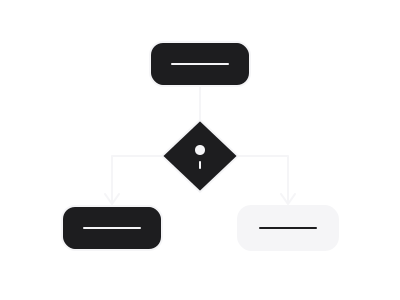
Before you start
Four things people get wrong first.
Is “NRI” one status or two?
Two. FEMA decides whether you are a person resident in India, and it looks at why you left and what you intend. The Income-tax Act decides whether you are a resident for tax, and it counts days. You can be non-resident under one and resident under the other in the very same year, and both answers are correct.
Does money have to move through a particular account?
Usually, yes. Income that arises in India — rent, dividend, pension, the proceeds of a sale — belongs in an NRO account. Money earned abroad can go to NRE or FCNR(B). Getting this wrong is the single most common reason a repatriation request is refused later.
Do I need a PAN?
For most things that involve a bank, a broker or a sub-registrar, yes. Without one, tax is deducted at a higher rate and a refund becomes difficult to claim. It is the cheapest piece of paperwork on this list and the one that saves the most trouble.
How current is any of this?
Every topic page names the rule it rests on and carries the date it was last checked. Rules under FEMA, the Income-tax Act and the RBI Master Directions do change. Check the position as on the date you act, and take advice on your own facts before you commit money.
A question the guide does not answer?
Tell us the facts and we will tell you where the rule sits.