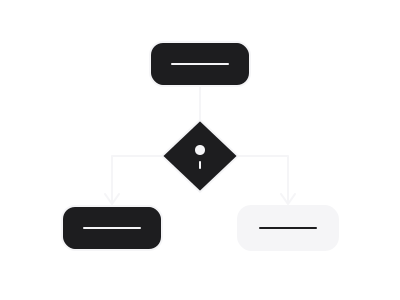
A bank will happily open all three for you, and the branch will usually lead with whichever deposit is paying best this quarter. That is the wrong end of the question. Under the Foreign Exchange Management (Deposit) Regulations, 2016 each account exists to solve a different problem, and once you know which problem you have, there is normally only one right answer.
Start with where the money came from
This single test settles most cases.
Money you earned outside India — salary, a bonus, proceeds of a foreign investment — belongs in an NRE or an FCNR(B) account. Money that arises in India — rent from a flat, a dividend, a pension, a maturity payout, the proceeds of selling property — belongs in an NRO account. It is not a preference. Indian income cannot be credited to an NRE account, and banks that allow it are creating a contravention for you to clean up later.
Which is why most NRIs end up holding two accounts rather than choosing between them: an NRE account for what comes from abroad, and an NRO account for what India pays them.
Then ask where it has to go next
The second test is repatriation — the freedom to send the money back out.
NRE and FCNR(B) balances leave India freely. Principal, interest, all of it, without a limit and without a certificate. An NRO account is different: up to USD 1 million per financial year may be remitted out of it, after Indian taxes have been paid, supported by Form 15CB from a chartered accountant and Form 15CA filed by you. Current income — rent, dividend, pension, interest — is freely repatriable net of tax and does not count against that million.
So if the money is destined to come back out soon, keeping it in NRO adds a queue and a cost. If it will stay in India for years, that hardly matters.
Now, and only now, the interest rate
Between NRE and FCNR(B) the real question is not the rate, it is who carries the exchange risk.
An NRE deposit converts your dollars, dirhams or pounds into rupees on the day the money lands. The rupee interest rate looks attractive next to what a bank abroad offers. If the rupee weakens over the deposit's life, the value of your money measured in the currency you will actually spend has fallen — and that fall can exceed the extra interest.
How far it would have to fall is arithmetic, and it is worth doing before you pick. FCNR(B) or NRE — how far the rupee has to fall
An FCNR(B) deposit does not convert. It stays in the foreign currency you sent, for a term between one and five years, and returns that same currency at maturity. The rate is lower. The exchange risk is not yours.
A useful rule of thumb: money that will be spent in India can sit in NRE; money that will be spent abroad should think hard about FCNR(B).
Tax, briefly
Interest on NRE and FCNR(B) deposits is exempt from Indian income tax for as long as you remain a person resident outside India under FEMA. Interest on an NRO account is taxable, and tax is deducted at source at the rate applicable to non-residents, subject to relief under the double taxation avoidance agreement with your country of residence — for which you will need a Tax Residency Certificate and Form 10F.
Do note that the exemption is tied to your FEMA status, not your income-tax status. The two are decided by different tests and can differ in the same year.
The day you move back
Returning to India for good ends all of this. NRE and NRO accounts must be redesignated as resident accounts, and an FCNR(B) deposit may run to maturity but is then converted. Foreign currency you have brought back can go into a Resident Foreign Currency account, which is the returning NRI's equivalent of FCNR(B).
Most people forget this step, and only discover it when a bank freezes a transaction years later. Tell your bank the week you land.
In one line
Foreign earnings that will be spent in India, in NRE. Foreign earnings that will be spent abroad, in FCNR(B). Anything India pays you, in NRO — and plan the paperwork before you need to move it out.
There is one other way to hold foreign currency without leaving India, and it works on a different principle entirely — a jurisdiction the law treats as offshore.
GIFT City: what it offers an NRI
This article is general information, current as at the date shown. It is not legal or tax advice. Deposit rules sit in the Foreign Exchange Management (Deposit) Regulations, 2016 and the RBI Master Directions issued under them, and are summarised in the RBI's FAQ Accounts in India by Non-residents, as on 16 January 2025; the tax treatment of the interest sits in the Income-tax Act, which the Income-tax Act, 2025 renumbers with effect from 1 April 2026. Check the current text before you act. Checked 20 September 2026.